
Mental Health in India: Who Can Help, Who’s Qualified, and How to Become One
 Mental Health in India
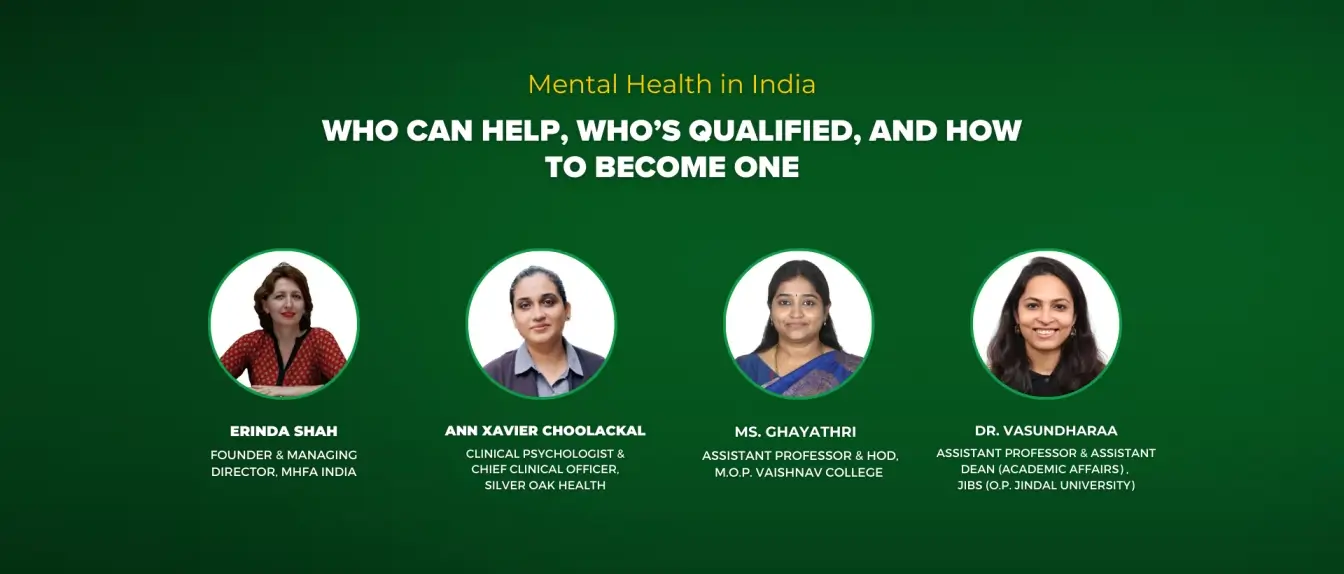
Below are curated excerpts from previous month’s webinar hosted by MHFA India — “Mental Health in India: Who Can Help, Who’s Qualified, and How to Become One.” This is not a full transcript; it’s a carefully framed summary of who is legally recognized to provide mental health services in India, what credentials and registrations matter, and how aspiring professionals can build legitimate pathways into the field.
NOTE: Over time, various changes may be introduced by the government. This information may need to be verified with the appropriate authorities to ensure it is up to date.
Editorial Perspective
The terms “therapist,” “counsellor,” “coach,” and “psychologist” are often used loosely. This helps normalize conversations but also creates confusion about who is actually licensed and trained to deliver care. With rising demand for mental health services, clarity around qualifications, scope of practice, and regulation has become urgent.
This session cut through the noise by mapping out how the Mental Healthcare Act (MHCA 2017), the Rehabilitation Council of India (RCI), and the newer National Commission for Allied & Healthcare Professions (NCHP 2021) together shape India’s mental health ecosystem.
About the Speakers
- Ann Xavier Choolackal — RCI-registered Clinical Psychologist; Chief Clinical Officer, Silver Oak Health.
- Ms. Ghayathri — Assistant Professor & HOD, M.O.P. Vaishnav College.
- Dr. Vasundharaa — Assistant Professor & Assistant Dean (Academic Affairs), JIBS (O.P. Jindal University); Psychiatric Social Work practitioner-academician.
The Conversation
Who is a “Clinical Psychologist”?
Erinda: Let’s begin with the basics. Who is legally recognized as a Clinical Psychologist in India?
Ann: Clinical Psychologists must be RCI-registered. Without that registration, even a postgraduate degree does not give you the legal right to practice independently. Titles can be misleading — “counselling psychologist” or “therapist” are often job designations, not proof of professional license.
Editorial Insight: This distinction matters for public safety. In India’s fast-growing wellness sector, anyone can adopt the title of “therapist.” But when it comes to diagnosis or structured therapy, always ask for an RCI registration number.
Where Do Psychiatric Social Workers Fit?
Erinda: And what about Psychiatric Social Workers (PSWs) — how are they recognized?
Dr. Vasundharaa: PSWs bring a systems perspective. Our training looks at the individual, family, and community together. Traditionally, the pathway was through an M.Phil. in Psychiatric Social Work at institutes like NIMHANS or CIP Ranchi. Today, the NCAHP (2021 Act) formally lists us as allied mental health professionals. Licensing pathways are still being clarified, but the recognition is a big step forward.
Editorial Perspective: This broad view is vital in India, where stigma, family dynamics, and social barriers strongly affect recovery. PSWs remind us that care must extend beyond the clinic and into daily life.
The Student Dilemma: Pathways vs Shortcuts
Erinda: Many students are passionate about psychology but unsure of the right path. What should they avoid?
Ms. Ghayathri: The biggest trap is short-term courses or foreign tie-ups marketed as professional qualifications. They may add knowledge, but they don’t give legal scope for clinical practice. What students truly need is recognized degrees, supervised training, and structured pathways.
Editorial Insight: In a country where demand is high, shortcuts are tempting. But unqualified practice can do more harm than good. For aspiring professionals, credibility lies in RCI or NCHP-recognised programs — not quick certificates.
Supervision, Ethics, and Professional Growth
Erinda: What about supervision and ethics — how well are they practiced today?
Ann: RCI requires Continuing Rehabilitation Education (CRE) credits for license renewal, but supervision is not yet standardized. Many of us in the field are advocating for structured supervision hours under NCHP, because ethical practice depends on it.
Editorial Perspective: Globally, supervision is non-negotiable. The UK’s BPS and the US’s APA make it mandatory. India’s regulatory systems are evolving, and supervision may soon become a cornerstone of ethical practice here too.
For the Public: How to Choose Wisely
Erinda: For someone seeking help, what’s the simplest way to know they’re approaching the right professional?
Ann: Ask three questions:
- What is your qualification?
- Are you RCI-registered (if they call themselves a Clinical Psychologist)?
- Who supervises your work or reviews your practice?
Editorial Insight: This is practical advice — the mental health equivalent of checking a doctor’s registration. It empowers the public to make safe, informed choices.
Key Takeaways
- Registration is key. RCI defines legal recognition for Clinical Psychologists today; NCHP will expand this for PSWs and other allied professionals.
- Titles are not equal to license . Job designations like “counselling psychologist” or “therapist” may not indicate legal scope.
- Students need pathways, not shortcuts. Prioritize degrees and supervised practice over quick certifications.
- Supervision matters. Beyond coursework and CRE credits, guided supervision is critical to ethical practice.
- Systems lens. PSWs bring family- and community-based perspectives, strengthening India’s multidisciplinary mental health response.
This conversation is part of the MHFA India Conversation Series — designed to bring clarity and credible voices to India’s evolving mental health landscape.
Watch the video to get full content: