
Therapy and Mental Health First Aid: Key Differences & When to Choose Each
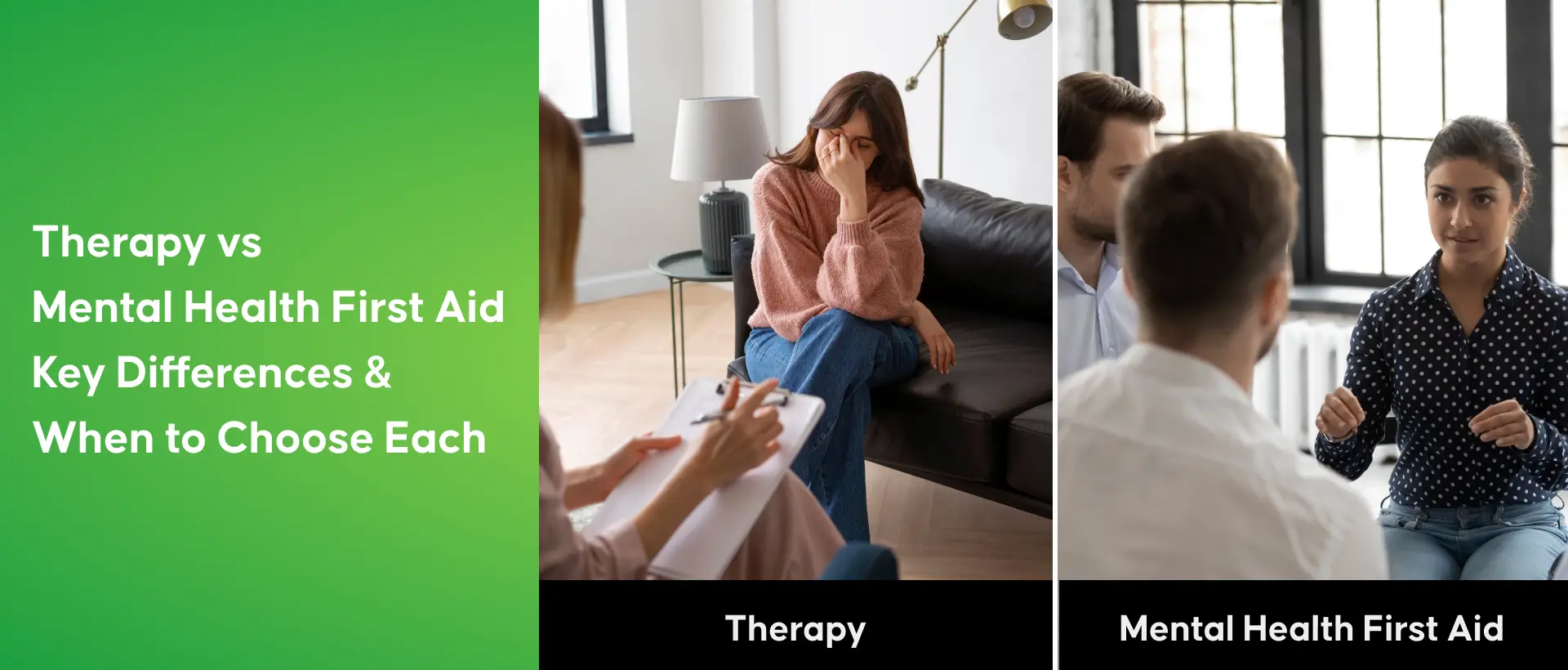
tWhen someone around you is struggling, knowing the difference between Mental Health First Aid (MHFA) and therapy can change everything. MHFA is the immediate, human response anyone can learn while professional support is still out of reach. And therapy is a structured, long-term care by a licensed mental health professional. Two very different tools, both critical to mental health support.
In India, fewer than 0.3 psychiatrists exist per 100,000 people, and over 150 million people need mental health support. Most people in distress will encounter a friend, colleague, or family member long before they ever see a professional. That first person — trained in Mental Health First Aid or not — can make all the difference.
Therapy vs Mental Health First Aid: A Quick Overview
Therapy involves professional, clinical treatment for mental health conditions. MHFA focuses on identifying distress and offering immediate, supportive help until professional care is available.
| Feature | Therapy | Mental Health First Aid (MHFA) |
|---|---|---|
| Focus | Long-term treatment and personal growth | Immediate support and crisis intervention |
| Role | Diagnose, treat and manage mental health conditions | Recognize signs, provide initial help, guide to professional resources |
| Structure | Structured sessions, usually spanning over weeks or months. | Short-term, often a few interactions or brief support. |
| Goal | Healing, symptom management, resolving deeper internal conflicts/trauma, behavioral change, and emotional growth. | Stabilize, offer immediate support and connect to professional help. |
| Duration | Multiple sessions over an extended period | Usually brief, immediate support during crisis or distress |
| Accessibility | May have barriers such as cost, availability, and waiting times | Widely accessible |
What Is Therapy?
Therapy is a structured form of treatment led by a licensed/registered mental health professional. Think of it as a safe, guided space where you can unpack your emotions, understand your thought patterns, build healthier ways of coping, and jointly decide action steps.
A therapist doesn't just listen. They use proven, evidence-based techniques to help you process what you're going through and to work on it. It's not a quick fix, but it's one of the most powerful tools available for long-term mental well-being.
Who is a Therapist?
A therapist is a trained, licensed professional — a psychologist, counsellor, clinical social worker, or psychiatrist — who helps individuals manage mental and emotional difficulties through structured, ongoing sessions. They assess needs, create treatment plans, and use evidence-based methods tailored to each person.
Types of Mental Health Therapy
Cognitive Behavioural Therapy (CBT): Identifies and changes negative thought patterns and behaviour. Dialectical Behavioural Therapy (DBT) is a related approach focused on emotional regulation and mindfulness.
Psychoanalytic therapy: Explores unconscious factors that influence behaviour and emotional responses.
Family and couples therapy: Addresses relationship dynamics to improve communication and resolve conflict.
Group therapy: One or more therapists work with multiple people facing similar challenges.
Trauma-informed therapy: Acknowledges the pervasive impact of trauma, prioritizing safety, trust, and empowerment throughout the healing process.
Who Should Consider Therapy?
Therapy is often mistaken for a sign of weakness. In truth, it is a proactive step toward well-being. Consider therapy if you:
- Feel persistently sad, anxious, or hopeless
- Are navigating a major life change or loss
- Carry unresolved trauma
- Struggle with relationships or daily functioning
- Want to develop greater self-awareness, resilience, and emotional balance
Goals of therapy
- Relief from symptoms and processing of trauma
- Improved emotional regulation and resilience
- Stronger interpersonal relationships and communication
- Healthier coping mechanisms and decision-making skills
- Greater self-awareness, self-esteem, and life satisfaction
What Is Mental Health First Aid?
Mental Health First Aid (MHFA) is an evidence-based, structured training programme that teaches people how to support someone facing a mental health challenge or crisis — until professional help arrives or the situation resolves.
MHFA is not a substitute for clinical treatment. It does not diagnose or treat mental illness. Instead, it equips everyday people to recognise warning signs, listen without judgement, and guide others toward professional help.
Think of it like physical first aid. A first aider doesn't replace a doctor — but without the first aider, the person may never reach the doctor at all.
Who is a Mental Health First Aider (MHFAider)?
An MHFAider is anyone who has completed MHFA training and is equipped to:
1. Recognise early signs of mental health distress
2. Initiate supportive, non-judgmental conversations
3. Guide the person toward professional resources or emergency services if needed
MHFAiders are not therapists or counsellors. They are the first line of support.
Who is MHFA for?
MHFA is designed for everyone, regardless of their background or profession — whether you're a parent, teacher, manager, student, HR professional, or community leader. It's built on the idea that anyone can play a meaningful role in supporting mental health, so no prior medical or mental health training is required to take part.
What MHFA Training Covers
- Understanding mental health and common mental illnesses
- Recognising early signs of distress
- The ALGEE action plan
- Crisis response skills
- Reducing stigma and encouraging help-seeking
Training is delivered by certified instructors through interactive activities, role-plays, and real-life scenarios — available both in-person and online.
→ Browse MHFA India's accredited courses and find one that suits you: View all courses
Therapy vs Mental Health First Aid: Core Differences
Therapy and Mental Health First Aid (MHFA) both support mental well-being but serve distinct purposes. Here’s a summary of their key differences:
Role and scope
- Therapy: A clinical, structured process by licensed professionals — diagnosing, treating, and managing mental health conditions over time.
- MHFA: A training programme for recognising distress and providing initial, non-clinical support — without diagnosis or treatment.
Education and qualifications
- Therapy: Requires advanced degrees, clinical supervision, and formal licensing — typically 5–8 years of study and practice.
- MHFA: A short, structured course open to the public — no prior qualifications needed. Certification is valid for 3 years.
Response and duration
- Therapy: Long-term treatment plans focused on symptom relief, behavioural change, and emotional healing.
- MHFA: Immediate, short-term support in a moment of distress — focused on stabilising and connecting to professional help.
Accessibility and cost
- Therapy: Can involve significant cost and waiting times, though sliding-scale and online options exist.
- MHFA: Training involves a course fee, but the support MHFAiders provide is free. Once trained, anyone can use these skills anywhere, at any time.
Therapists vs Mental Health First Aiders: At a Glance
| Feature | Therapist | Mental Health First Aider |
|---|---|---|
| Work | Long-term treatment and management of mental health conditions | Immediate response to early signs of distress or crisis |
| Scope | Diagnose, treat, support emotional and psychological healing | Provide initial support, de-escalate, guide toward professional help |
| Training | Formal education, clinical supervision, licensing | Short structured course — open to everyone |
| Qualifications | Licensed mental health professional | Certified MHFAider after completing MHFA training |
A real-life example
Aarav has been feeling anxious for a few weeks and mentions it to his friend Meera. Meera, trained in MHFA, recognises the signs of distress. She listens calmly, reassures him without judgement, and encourages him to speak with a professional. Aarav takes that step, begins therapy, explores the roots of his anxiety, and builds coping strategies with his therapist's support.
MHFA opened the door. Therapy walked him through it.
When to Seek Therapy
We all go through periods of struggle, but some experiences run deeper than a bad week. Therapy offers a safe, confidential space to work through what's weighing on you — with guidance from someone trained to help. It's not just for crisis moments; it's a space to understand yourself, process what's holding you back, and build lasting emotional resilience. Consider therapy if you or someone you know:
- Struggles with daily functioning, relationships, or boundaries
- Carries unresolved trauma or grief
- Has difficulty coping with change or life transitions
- Engages in harmful behaviours
- Wants structured, ongoing support for emotional well-being
When Mental Health First Aid is the Right Response
Mental health crises don't always announce themselves — they often show up quietly, in small changes in behaviour, mood, or withdrawal. MHFA equips everyday people to recognise these signs early and respond with calm, compassionate support before professional help steps in. You don't need to be an expert to make a difference; sometimes showing up and knowing what to say is enough. It's the right first response when someone is:
- Showing visible signs of emotional distress
- Withdrawing socially or behaving out of character
- Expressing hopelessness or thoughts of self-harm
- Struggling with substance use
- In a moment of crisis and unsure where to turn
MHFA doesn't replace therapy — it's the bridge that gets people there.
What Therapists Treat
Therapists diagnose and treat a wide range of conditions, including mood disorders (depression, bipolar), anxiety, trauma and PTSD, OCD, eating disorders, substance use, personality disorders, grief, and relationship issues — using approaches like CBT, DBT, and psychodynamic therapy.
What MHFAiders Respond to
MHFAiders use the ALGEE action plan to respond to: signs of depression or anxiety, panic attacks, acute stress reactions, suicidal thoughts or behaviours, psychosis or hallucinations, and aggressive or erratic behaviour.
How Therapy and MHFA are Similar
Despite their differences, both approaches share important values:
1. Both are person-centred — empathetic, non-judgmental, and focused on the individual's needs
2. Both aim to reduce stigma and create safe spaces for people in distress
3. Both prioritise confidentiality as the foundation of trust
MHFA offers the first response. Therapy provides the ongoing care. Together, they form a complete support system.
Which Type of Support is Right for You?
- Psychologists diagnose and treat mental disorders through structured therapy.
- Counsellors and therapists address life challenges like grief, stress, and relationship issues through talk-based support.
- Psychiatric social workers support social reintegration alongside clinical care.
- Mental Health First Aiders provide immediate, non-clinical support and guide people toward professional help.
Unsure where to start? An MHFAider can be the first, most accessible step.
Related: Psychological First Aid (PFA) vs Mental Health First Aid (MHFA): What Are the Differences?
Related: Counselling vs Mental Health First Aid: Is There a Difference?
Ready to become a Mental Health First Aider? MHFA India offers internationally accredited, evidence-based training for individuals, workplaces, and educational institutions across India.
View all courses → | Book a corporate training →
References
Therapy - APA Dictionary of Psychology
American Psychiatric Association, “What is Psychotherapy?” (Patients & Families)
Cleveland Clinic, “Psychotherapy: What It Is, Why It Is Done & Types”
National Institute of Mental Health, “Psychotherapies” (Health Topics)
American Psychological Association, “Understanding psychotherapy and how it works”
Psychology Today, “Types of Therapy”
Corey, G. (2016). Theory and Practice of Counseling and Psychotherapy (10th ed.). Cengage Learning
Mental Health First Aid USA. What is Mental Health First Aid?
Morgan, A. J., Ross, A., & Reavley, N. J. (2018). Systematic review and meta-analysis of Mental Health First Aid training: Effects on knowledge, stigma, and helping behaviour. PLoS ONE, 13(5), e0197102
Frequently Asked Questions (FAQ's)
Is mental health first aid the same as counselling?
No. MHFA is brief, immediate support provided by a trained non-professional. Counselling is an ongoing clinical service delivered by a qualified professional over multiple sessions.
Can I do MHFA training without any medical background?
Yes. MHFA courses are designed for the general public and require no prior qualifications or medical experience whatsoever.
Does completing MHFA training make me a therapist?
No. MHFA training equips you to provide initial support and help someone access professional care — not to diagnose or treat any condition.
How long does MHFA certification last in India?
MHFA certification is valid for 3 years. A refresher course is available to renew accreditation.
Why does India need Mental Health First Aiders?
India has a severe shortage of mental health professionals. With millions in distress and too few experts to help, most people will turn to someone they know first. Trained Mental Health First Aiders fill that gap by offering immediate, informed support and guiding people toward the right care.