
How Do Employee Assistance Programs vs Mental Health First Aid Differ in Supporting Workplace Mental Health?
Mental Health in Workplace & Why It's Important
Mental health in the workplace is a growing concern with significant implications for both employees and organizations. The World Health Organization estimates that 15% of working-age adults globally had a mental disorder in 2019, and depression and anxiety alone cost the global economy approximately $1 trillion each year (WHO, 2024). Workplace stressors such as excessive workloads and job insecurity only deepen these challenges, as seen in the 2024 death of a young accountant in Pune, which sparked national discussions about toxic work environments.
For businesses, investing in mental health is not just a corporate responsibility but a strategic necessity. 92% of workers say it is important to work for an organization that values their well-being (APA, 2023), and organizations that prioritize mental health see increased employee engagement, reduced absenteeism, and a more resilient workforce (WHO, 2024).
What is Employee Assistance Program (EAP)?
An Employee Assistance Program(EAP) is a third-party service that provides voluntary, confidential services to employees who need help managing personal difficulties or life challenges. The program typically addresses the following concerns:
- Marital or family problems
- Mental health disorders
- Substance abuse
- Financial stress
- Legal problems
- Bereavement
- Caregiver stress
EAPs aim to improve employee productivity, reduce absenteeism, and foster a healthier work environment by offering support in navigating personal struggles. Many companies offer EAP services as a benefit to help employees cope with issues both inside and outside of work.
How Employee Assistance Program Works?
An Employee Assistance Program (EAP) works by providing employees with access to a range of confidential services designed to support them in managing personal and professional challenges. The services offered typically include counseling, financial and legal assistance, educational programs, and more, aimed at improving the employee's well-being and helping them respond to life’s challenges more effectively.
Here’s how an EAP works:
- Confidentiality: Employees can seek help without fear of their issues being shared with their employer, as services are protected by privacy laws.
- Services: EAPs offer:
- Counseling for mental health or stress.
- Financial and legal assistance.
- Critical incident response for workplace emergencies.
- Family and elder care support.
- Access: Employees can access services in-person, online, or via phone, often 24/7.
- Referral: An intake specialist may direct employees to the right resources or specialists.
- Types of EAPs:
- In-house: On-site counselors.
- Outsourced: Third-party providers.
EAPs help reduce workplace stress, improve well-being, and increase productivity by providing employees with the support they need to handle life's challenges.
Implementing an Employee Assistance Program
To implement an EAP successfully, organizations must ensure accessibility, confidentiality, and proactive communication about services available. That means working with professional counselors, integrating EAPs into larger wellness efforts and creating a safe space for employees to seek help. Program effectiveness and engagement may benefit from regular evaluation and feedback mechanisms.
How EAP Works
Employees access EAP services through in-person, phone, or online channels, often available 24/7. A key feature is confidentiality — employees can seek help without their employer being informed, protected by privacy laws. An intake specialist typically helps direct employees to the right counselor or resource. EAPs are either run in-house with on-site counselors or outsourced to third-party providers.
Advantages of EAPs
- Reliable and verified access to clinical care and professional counseling for employees.
- Quick access to address immediate needs.
- Confidentiality ensures privacy and protects employees privacy.
- In-person services and access can sometimes enhance impact.
- Can be integrated into broader wellness initiatives for greater well-being.
- It sometimes extends to family members.
Limitations of EAPs
- Ongoing expenditure to access which may not necessarily be utilized by staff.
- Limited reach to employee in a proactive manner to promote EAP and its benefits. EAPs provide temporary fixes but rarely offer long-term mental health support (Journal of Insurance Regulation).
- Limited possibility to picking up problems at early stages.
- No impact in company culture.
Related: Top 5 Alternatives to Traditional Employee Assistance Programs
What is Mental Health First Aid (MHFA)?
Mental Health First Aid is an evidence-based, structured, comprehensive training program that can help people understand, recognize and respond to mental health challenges in a supportive and effective manner. Modeled after the longstanding model of first aid training for physical health, Mental Health First Aid teaches individuals how to respond to mental health crises like anxiety or depression, panic attacks, and suicidal ideation.
The Program has been extensively researched and validated by institutions such as the National Institute of Mental Health (NIMH) . It is now recognized and availed of in more than 29 countries such as the United States, Canada, and the United Kingdom.
Almost 1 in every 7 person (NMHS, 2016) in India are suffering from mental Illness. Stigma can inhibit them from seeking help, so early intervention is critical. Mental Health First Aid India trains participants to identify signs of distress and how to respond and direct someone to professional care. These programs, led by accredited instructors and implemented in workplaces, schools, and communities to create a supportive and stigma-free environment.
Why MHFA Matters: The Science Behind It
Research highlights the critical need for mental health interventions in workplaces:
- Mental Health interventions are essential for workplaces. A study shows that 1 in 5 adults worldwide has a mental health condition each year (World Health Organization, 2023).
- 75% of employees do not disclose mental Health struggles out of stigma (BMC Public health, 2024).
- Organizations that implement MHFA report 20-25% reduction in absenteeism and increased employee retention (Forbes Workplace Wellness Report, 2023).
- Meta-analysis ( JORM 2018,PUB MED) concluded that MHFA training improves: Mental health literacy.
How Mental Health First Aid Works?
Mental Health First Aid (MHFA) is an evidence-based training program designed to equip individuals with the skills and knowledge to recognize and respond to mental health issues and substance use challenges. The program focuses on early intervention, offering practical support to individuals in distress, and guiding them to professional help when needed. Through a structured approach, MHFA helps reduce stigma, promotes non-judgmental support, and empowers individuals to take control of their mental health. It differs from traditional first aid by focusing on mental health rather than physical injuries, ensuring people are prepared to assist in mental health crises. Lets check how MHFA works:
1. Training and Skills:
- Recognizing Signs and Symptoms: MHFA training teaches participants how to identify common mental health conditions and substance use disorders. These include conditions such as depression, anxiety, psychosis, and substance misuse.
- Understanding Mental Health: Participants learn about the factors contributing to mental health problems and the importance of early intervention. This knowledge helps them understand how to provide better support.
- Providing Initial Support: MHFA emphasizes how to offer practical and supportive assistance to someone experiencing mental health challenges. Key elements include active listening, empathy, and encouragement.
- Connecting to Professional Help: MHFA teaches participants how to guide individuals toward seeking professional help and support resources, ensuring they get the appropriate care and assistance.
2. Core concepts MHFA:
- Early Intervention: MHFA promotes early identification and intervention to prevent mental health problems from worsening and escalating into more severe issues.
- Non-Judgmental Support: The program emphasizes providing support and understanding without judgment or stigma, creating a safe space for individuals to open up about their mental health struggles.
- Empowerment: MHFA aims to empower individuals, helping them take control of their mental health and seek help when needed.
- Reducing Stigma: MHFA plays a key role in reducing stigma around mental health, fostering a more supportive and inclusive environment for those experiencing challenges.
- Working with Professionals: The training highlights the importance of collaborating with mental health professionals and other support systems, ensuring a comprehensive approach to mental health care.
3. Beyond Traditional First Aid:
- Focus on Mental Health: While traditional first aid focuses on physical injuries, MHFA is specifically designed to address mental health and substance use challenges.
- Initial Support: MHFA provides initial support until professional help becomes available, but it is not meant to replace professional treatment.
- Public Education: MHFA is primarily a public education program. It equips members of the public with the necessary skills to support others in times of mental health distress.
Implementing Mental Health First Aid Program
Advantages of Mental Health First Aid Program (MHFA)
- Stabilizing structured and formalized peer-peer support systems provides employees with a consistent and reliable network during mental health challenges.
- Developing resilience and maintaining long-term mental health requires self-care and positive affective and mental states.
- The earlier employees receive appropriate care and intervention, the lower the risk that conditions worsen over time.
- MHFA-trained employees may identify and address mental health concerns earlier in a more supportive workplace.
- Normalizing discussions around mental health removes stigma and opens up discussions about well being.
- A workplace culture of care, empathy and psychological safety builds employee engagement and support.
- Prevention strategies reduce the risk of severe mental health issues arising by addressing concerns before they become serious.
- Stimulating early help-seeking behaviors increases employee chances of getting the help they need when they need it most.
- Reduced gaps in mental health treatment and support prevent unnecessary delays for employees getting care.
- Confidence in mental health support systems gives employees the assurance help is available, effective and confidential.
- Knowing how to label signs and symptoms of mental health conditions helps employees avoid stigmatizing language and promotes respectful conversation.
Limitations of MHFA
- May need periodic refresher courses to ensure employees retain their skills.
- Doesn't provide professional counseling.
What Are the Key Differences Between EAP and MHFA?
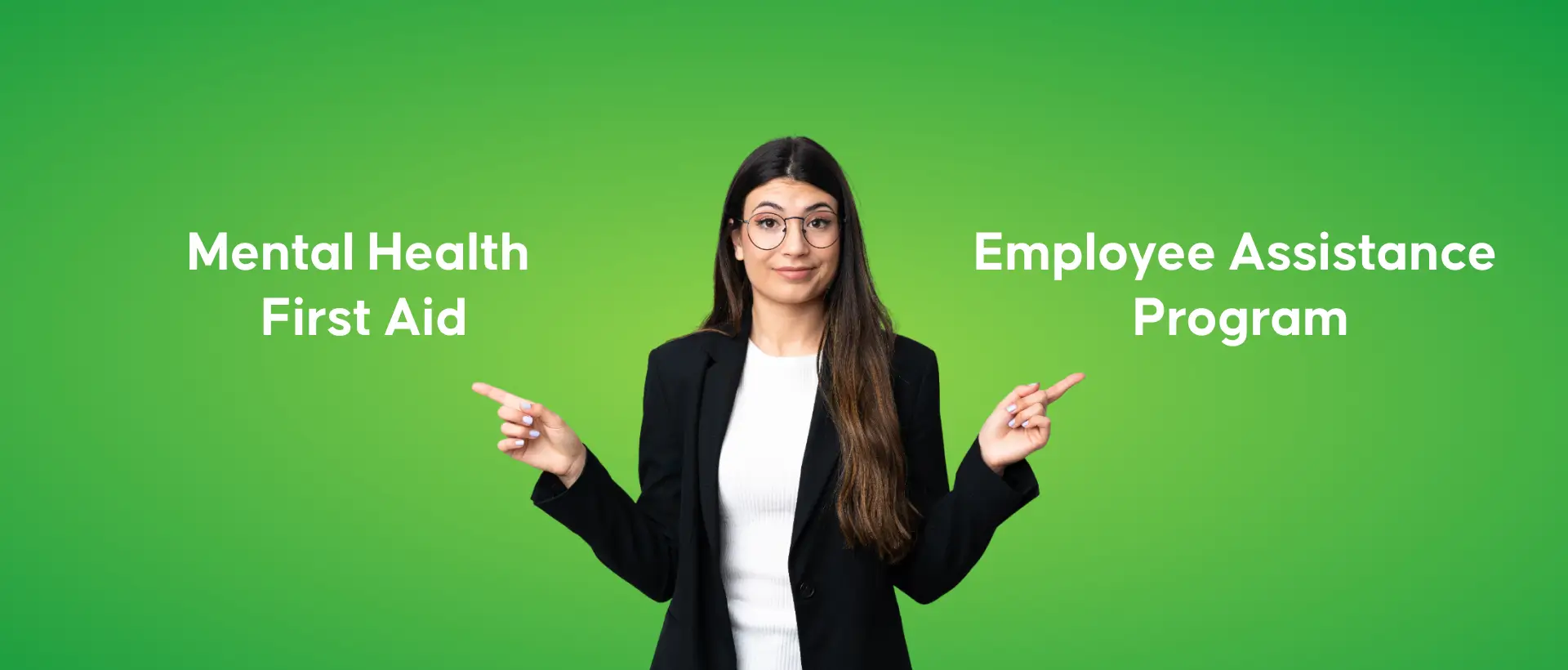
EAP and MHFA both support mental health at work, but they work in very different ways. Understanding how they differ helps organizations choose the right approach and use both effectively.
EAP is reactive. It is a professional support service that offers counseling, legal guidance, and financial help whenever an employee decides to reach out. The challenge is that most employees never do. In India, only 5 to 10% of employees actually use EAP services, mainly because of stigma, fear of judgment, and low awareness about the program.
MHFA is proactive. Rather than waiting for someone to ask for help, it trains colleagues and managers to recognize early signs of mental distress and respond with empathy and support. MHFA goes beyond crisis response — it builds mental health education across the workforce, encourages early intervention before issues escalate, and promotes mental health prevention by making well-being a daily priority, not an afterthought.
| Feature | EAP | MHFA |
|---|---|---|
| Approach | Reactive | Proactive |
| Support comes from | External professionals | Trained peers & managers |
| Who initiates | Employee | Colleague or manager |
| Mental health education | Limited | Core focus |
| Early intervention | Low | High |
| Prevention focus | Minimal | Significant |
| Reduces stigma | Low | High |
| Culture change | Minimal | Significant |
| Cost | Ongoing fee | One-time training |
| Best for | Crisis & clinical care | Education, prevention & early intervention |
EAP provides the professional care employees need during difficult times. MHFA builds the kind of workplace culture where employees feel safe enough to seek that care. One builds the culture. The other provides the care. Together, they create a truly supportive workplace.
Related: Psychological First Aid (PFA) and Mental Health First Aid (MHFA): What Are the Differences?
Why is Mental Health First Aid Better Than Employee Assistance Program?
Mental health in the workplace is an issue that demands urgent attention, particularly in a rapidly developing country like India. While traditional Employee Assistance Programs (EAPs) provide valuable support, there are significant challenges that hinder their effectiveness, especially in the context of Indian workplaces. These barriers highlight why Mental Health First Aid (MHFA) could be a more impactful solution for improving mental health at work.
The effective Limitations of Employee Assistance Programs (EAPs)
EAPs have long been a staple in workplace mental health strategies. These programs offer counseling and support for personal issues such as stress, substance abuse, and family problems. However, EAPs often face significant challenges when it comes to utilization and effectiveness in countries like India.
Research reveals that the utilization rate of EAPs in India is alarmingly low, with only about 5-10% of employees seeking help through these programs. One of the primary reasons for this under utilization is the fear of stigma and concerns about confidentiality. According to a study published by BMC, 75% of employees in India fear stigma and potential job loss when disclosing mental health issues. Many employees are hesitant to reach out to EAPs because they perceive these services as impersonal or worry that their confidentiality will be compromised. This is especially true in cultures where mental health is still misunderstood, and employees fear career setbacks due to perceived vulnerabilities.
Mental Health First Aid (MHFA) the Proactive Solution
In contrast, MHFA offers a more proactive, early intervention approach. Instead of waiting for employees to seek help, MHFA empowers colleagues and managers to recognize early signs of mental distress and offer immediate, supportive interventions. Research indicates that early intervention significantly reduces the severity of mental health issues, making MHFA a powerful tool for tackling mental health challenges in the workplace before they escalate.
The proactive nature of MHFA allows for quicker responses to mental health struggles, which is crucial in a high-pressure workplace. MHFA training equips employees with the skills to identify signs of distress, such as withdrawal, irritability, absenteeism, or decreased productivity. By addressing issues early, MHFA can prevent burnout, anxiety, and depression from affecting employees' well-being and work performance.
Moreover, MHFA is rooted in workplace realities, making it highly relevant and practical for employees. Unlike the generic, one-size-fits-all approach often seen with EAPs, MHFA focuses on supporting colleagues within the context of their daily work life. Employees are more likely to confide in trained peers or managers who understand their challenges and can offer practical, workplace-specific support.
Conclusion
Both Employee Assistance Programs (EAPs) and Mental Health First Aid (MHFA) are essential in fostering workplace mental well-being. While EAPs offer professional, confidential support, they are often underutilized due to stigma and their reactive nature.
MHFA takes a proactive approach, enabling early intervention, reducing stigma, and fostering a culture where seeking help is normalized. By integrating EAP with MHFA, organizations can build a comprehensive support system—one that not only provides expert care when needed but also encourages open dialogue and peer support.
For Indian workplaces, where mental health awareness is still growing, these approaches ensures a healthier, more engaged workforce, leading to improved productivity, well-being, and long-term success.
Frequently Asked Questions (FAQ's)
What are the core components of an effective EAP and MHFA?
An effective EAP includes confidential counseling, financial and legal assistance, 24/7 accessibility, critical incident response, and family support services. MHFA's core components include mental health education, early intervention training, stigma reduction, peer support systems, and structured guidance to connect employees with professional care.
What are the key differences between EAP and MHFA programs?
EAP is a reactive, professional service that employees access when they are already struggling. MHFA is a proactive training program that equips colleagues and managers to recognize early signs of distress and offer support before issues escalate. EAP provides clinical care from external professionals while MHFA builds a mental health culture from within the organization.
Benefits of implementing mental health first aid training in Indian companies
MHFA training helps Indian companies reduce stigma, encourage early help-seeking, and build a culture of psychological safety. Organizations report a 20 to 25% reduction in absenteeism after implementing MHFA. With only 5 to 10% of employees using traditional EAP services due to stigma, MHFA bridges the gap by bringing peer-level support directly into the workplace.
How do organizations integrate employee support services with mental health first aid?
Organizations integrate both by using MHFA as the first layer of support and EAP as the professional follow-up. MHFA-trained employees identify distress early and refer colleagues to EAP services when needed. Together they create a complete support system where MHFA builds the culture and EAP provides the clinical care.
Cost of mental health first aid certification for corporate teams in India
The cost of MHFA certification for corporate teams in India varies depending on the provider, team size, and training format. Standard certification programs typically range from a one-day to two-day training. It is recommended to contact accredited MHFA India providers directly for customized corporate pricing.
Can I get online MHFA certification through EAP providers in India?
No. Mental Health First Aid India is the only authorized provider of MHFA certification in India. EAP providers do not offer MHFA certification. To get a recognized and accredited MHFA certification for your corporate team, you need to connect directly with Mental Health First Aid India.
How do EAP and MHFA programs improve mental health support at work?
EAP improves mental health support by giving employees access to professional counseling, legal, and financial assistance when they need it. MHFA improves support by training employees to recognize and respond to mental health challenges early, reducing stigma and encouraging open conversations. Together they address mental health at every stage, from prevention to professional care.
Which providers offer online workplace mental health first aid training in India?
MHFA India is the only authorized provider of online and offline workplace mental health first aid training in India. Programs are led by accredited instructors and are designed specifically for workplace settings, ensuring teams receive recognized and quality certified training.