
International Youth Day: Empowering Young Voices for a Sustainable Future
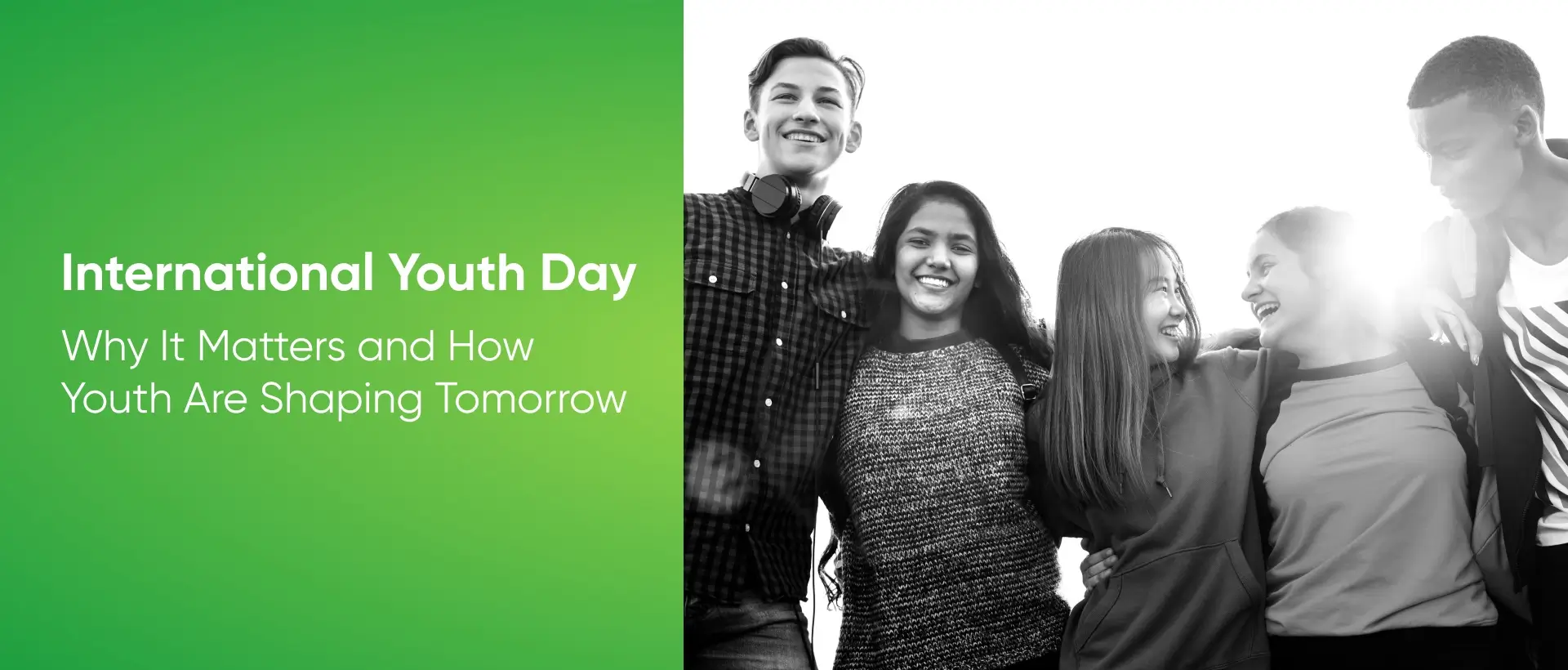
With over 1.8 billion young people aged 15–24 worldwide, the largest youth population in history (United Nations, 2023), the potential for change has never been greater. International Youth Day is more than a symbolic date; it is a global call to recognize and empower youth as leaders, innovators, and problem-solvers. From tackling climate change and championing mental health to driving digital transformation, young people are not just preparing for the future, they are actively shaping it today. Celebrated every 12 August, International Youth Day brings attention to their vital role in building inclusive, resilient, and sustainable societies.
What Is International Youth Day?
International Youth Day is an annual observance dedicated to recognizing the potential, contributions, and challenges faced by young people worldwide. Celebrated globally on August 12th, this day serves as a platform to amplify youth voices and promote their active participation in addressing pressing global issues.
The day offers a chance to raise awareness of the need to ensure the engagement and participation of youth, which is essential to achieve sustainable human development, focusing on empowering young individuals aged 15-24, who represent approximately one-sixth of the global population. It emphasizes their role as agents of change in areas ranging from climate action and social justice to technological innovation and sustainable development.
Who Started International Youth Day?
The genesis of International Youth Day can be traced back to the collaborative efforts of youth advocates and international organizations. The initiative was formally established through the United Nations General Assembly, which recognized the need for a dedicated platform to address youth-related concerns on a global scale.
The World Conference of Ministers Responsible for Youth, held in Lisbon, Portugal, in August 1998, played a pivotal role in proposing this observance. Their recommendation emphasized the importance of creating an annual moment to reflect on youth issues and celebrate their contributions to society.
History of International Youth Day
The United Nations has long recognized the role of youth in building peace, fostering mutual respect, and driving sustainable development. In 1965, the General Assembly adopted a declaration urging young people to embrace peace, understanding, and solidarity. Throughout the following decade, youth discussions centered on three core themes — participation, development, and peace. In 1979, the UN declared 1985 as the International Youth Year, introducing guidelines to address the diverse needs of youth, including young women, persons with disabilities, and those in rural or urban areas.
In 2009, the UN announced that the year starting on 12 August 2010 would be called the International Year of Youth. This marked 25 years since the first International Youth Year and aimed to encourage young people to take part in global activities.
The specific idea for International Youth Day originated from young people themselves:
| Year | Milestone |
|---|---|
| 1965 | UN General Assembly adopts Declaration on Youth Ideals |
| 1985 | International Youth Year proclaimed |
| 1998 | World Conference of Ministers recommends Youth Day |
| 1999 | UN General Assembly officially establishes International Youth Day |
| 2000 | First International Youth Day celebrated |
| 2010 | International Year of Youth marks 10th anniversary |
Since then, International Youth Day has been a platform to amplify youth voices, encourage active participation in decision-making, and inspire collaborative solutions for global challenges.
| Aspect | Details | |
|---|---|---|
| Date | 12 August | |
| Origin | Proposed in 1991 by youth at the World Youth Forum; officially established by the United Nations in 1999 | |
| Purpose | To celebrate youth contributions and raise awareness of their issues | |
| Themes | Vary annually, focusing on key youth-related challenges | |
| Activities | Events, workshops, social campaigns, policy discussions, and cultural programs | |
| Global Impact | Encourages youth leadership, community engagement, and active participation in global decision-making |
Why Do We Celebrate International Youth Day?
International Youth Day serves multiple critical purposes in our interconnected world:
Amplifying Youth Voices: The day provides a global platform for young people to express their concerns, share innovative solutions, and influence policy decisions that affect their lives and futures.
Addressing Systemic Challenges: It highlights pressing issues such as:
- Educational inequality and access barriers
- Youth unemployment and economic instability
- Mental health concerns and support systems
- Climate change impacts on future generations
- Digital divide and technological accessibility
Promoting Intergenerational Dialogue: The observance encourages meaningful conversations between different age groups, fostering mutual understanding and collaborative problem-solving.
Celebrating Achievements: It recognizes the remarkable contributions young people make in fields ranging from technology and art to social activism and community development.
International Youth Day Date
International Youth Day is observed annually on August 12th. This date was specifically chosen to commemorate the conclusion of the World Conference of Ministers Responsible for Youth in Lisbon, which took place from August 8-12, 1998.
In India, International Youth Day is celebrated on 12 August in line with the UN observance, with government bodies, NGOs, and youth-led organizations hosting workshops, cultural events, and awareness drives on themes such as education, health, employment, and civic engagement. India additionally observes National Youth Day on 12 January to commemorate the birth anniversary of Swami Vivekananda, recognising his enduring influence on youth leadership and nation-building.
International Youth Day Timeline
- August 8-12, 1998: World Conference of Ministers Responsible for Youth (Lisbon)
- December 17, 1999: UN General Assembly Resolution 54/120 establishes the day
- August 12, 2000: First official International Youth Day celebration
- August 12, 2025: Current year's observance with focus on local action
- August 12, 2026: Young people’s lives are shaped by different national and local realities
International Youth Day Theme
Each year, International Youth Day adopts a specific theme that reflects current global priorities and youth concerns. These themes guide activities, discussions, and initiatives worldwide.
| Year | Theme |
|---|---|
| 2018 | Safe Spaces for Young People |
| 2019 | Transforming Education |
| 2020 | Youth Participation for Global Action |
| 2021 | Transforming Food Systems: Youth-Led Innovations for People and Planet |
| 2022 | Intergenerational Solidarity: Building a World for All Ages |
| 2023 | Green Skills for Youth: Creating a Sustainable Future |
| 2024 | From Clicks to Change: Youth Digital Pathways for Sustainable Growth |
| 2025 | Local Youth Initiatives for the SDGs and Beyond |
| 2026 | Different Contexts, Common Aspirations |
International Youth Day 2025 Theme
"Local Youth Actions for the SDGs and Beyond"
This year's theme focuses on the power of young people in localizing the Sustainable Development Goals (SDGs) and turning global commitments into local realities. Young people are not just beneficiaries of development; they are active leaders, innovators, and agents of change within their communities.
As UN Secretary-General António Guterres notes, "This year's theme – Local Youth Action for the SDGs and Beyond – reminds us that global progress begins in communities. And in every corner of the world young people are leading the way".
Key focus areas include:
- Community-led environmental projects
- Local entrepreneurship and economic development
- Digital inclusion initiatives in underserved areas
- Cultural preservation and promotion activities
- Social justice advocacy at the grassroots level
International Youth Day 2024 Theme
"From Clicks to Progress: Youth Digital Pathways for Sustainable Development"
The 2024 theme highlighted the transformative potential of digital technologies in empowering young people, addressing both opportunities and challenges in the digital landscape, including digital literacy, online entrepreneurship, cybersecurity, and leveraging technology for social impact.
Significance of International Youth Day
The International Youth Day Significance
This year's observance carries exceptional importance as we stand at a pivotal moment in global development history. The significance extends beyond mere celebration, encompassing critical milestones and opportunities for transformative action.
Global Impact Metrics
| Aspect | Statistics |
|---|---|
| Global Youth Population | 1.8 billion (age 10–24) |
| Youth Unemployment Rate | 13.6% globally |
| Young People in Education | 1.6 billion students worldwide |
| Youth-led Organizations | Over 50,000 globally |
| Digital Native Population | 2.6 billion under age 30 |
| Prevalence of Mental Health Disorders in Youth | About 14% of adolescents (ages 10–19) experience a mental health condition globally |
Decade Milestone for the 2030 Agenda
International Youth Day 2025 marks the halfway point to achieving the 2030 Agenda for Sustainable Development, adopted in 2015 with 17 goals to end poverty, protect the planet, and ensure prosperity for all. This milestone is a chance to assess progress, close implementation gaps, and reignite action.
Showcasing Local Leadership and Grassroots Innovation
The official 2025 IYD commemoration will take place on 12 August in Nairobi, Kenya, in collaboration with the UN-Habitat, emphasizing how meaningful change often begins at the grassroots level through youth-led environmental campaigns, community health projects, and innovative educational technologies.
How to Celebrate International Youth Day?
International Youth Day is more than a date on the calendar, it’s a call to action. It’s an opportunity to recognize the contributions of young people, amplify their voices, and create spaces where they can lead change. Celebrations can range from local community events to global campaigns, all aimed at inspiring, empowering, and uniting youth for a better future.
Individual Actions
Personal Development Focus
- Engage in skill-building activities or online courses
- Join youth-led organizations or volunteer programs
- Start a personal project addressing a local issue
- Connect with young people from different backgrounds
Community Engagement
- Organize neighborhood clean-up drives
- Host intergenerational dialogue sessions
- Create social media campaigns on youth issues
- Support local youth-led businesses or initiatives
Organizational Initiatives
Educational Institutions
- Conduct symposiums on youth leadership
- Organize career guidance sessions
- Create platforms for student innovation showcases
- Establish mentorship programs
Corporate Participation
- Launch youth internship programs
- Sponsor youth-led community projects
- Provide platforms for young entrepreneurs
- Support youth skill development initiatives
What Is the Purpose of International Youth Day?
The primary purposes of International Youth Day encompass several interconnected objectives:
Awareness Building: Creating global consciousness about the challenges young people face, from educational barriers to mental health concerns and economic instability.
Policy Advocacy: Influencing governments and institutions to develop youth-friendly policies and allocate adequate resources for youth development programs.
Capacity Building: Empowering young people with the skills, knowledge, and platforms they need to become effective change agents in their communities.
Network Creation: Facilitating connections between youth organizations, fostering collaboration and knowledge sharing across geographical and cultural boundaries.
Get Involved and Support Youth Activities
Participation in youth-focused activities creates meaningful connections and demonstrates commitment to youth empowerment (UN Youth, 2024):
- Mentorship Programs: Join established programs like Big Brothers Big Sisters or create informal mentoring relationships with young people in your community.
- Youth Centers: Volunteer at local community centers, offering skills workshops or simply providing supportive presence.
- Sports and Recreation: Participate in or sponsor youth sports leagues, arts programs, or outdoor adventure activities.
Show an Interest in Young People
Genuine engagement with young people requires intentional effort and authentic curiosity (UN Youth, 2024):
- Active Listening: Create safe spaces for young people to share their thoughts, concerns, and aspirations without judgment.
- Technology Bridge: Ask young people to share their knowledge about digital tools, social media trends, or emerging technologies.
- Career Guidance: Share professional experiences and insights while respecting their autonomy to make their own choices.
Get Involved with an International Youth Day Event
Global and local events offer various participation opportunities (UN Youth, 2024):
- UN-Sponsored Events: Join official commemorative events through UN Youth programs.
- Virtual Conferences: Participate in online symposiums and webinars focused on youth issues.
- Local Celebrations: Attend community events organized by youth organizations, schools, or civic groups (UN Youth, 2024)
Five Things to Know About International Youth Day
- It’s a UN initiative — declared by the United Nations General Assembly in 1999 to spotlight youth issues worldwide.
- Date is fixed — celebrated every year on 12 August to mark the end of the 1998 World Conference of Ministers Responsible for Youth.
- Themes change annually — each year focuses on a different global challenge, from climate action to youth civic engagement.
- It’s not just symbolic — the day often sparks new policies, programs, and collaborations for youth development.
- It’s global and local — while the UN leads the global campaign, most impact comes from grassroots events in communities.
Mental Health and Youth Development
Youth typically defined as ages 10–24 that includes both adolescents (10–19) and young adults (20–24), each facing distinct but interconnected challenges. Adolescence is a unique and formative stage marked by rapid physical, emotional, and social changes. Factors such as poverty, abuse, violence, academic pressure, and social isolation can increase vulnerability to mental health problems. Young adulthood, on the other hand, often brings its own stressors, including career uncertainty, higher education pressures, financial independence, and relationship challenges. WHO, in collaboration with UNAIDS, UNESCO, UNFPA, UNICEF, UN Women, the World Bank Group, and the World Food Programme (WFP), has established the Global Action for the Measurement of Adolescent health (GAMA) Advisory Group to improve adolescent health measurement globally.
Resources for International Youth Day
Official Resources
United Nations Youth
- Official website: www.un.org/en/observances/youth-day
- Social media platforms with regular updates and resources
- Annual theme materials and implementation guides
- Global event calendar and participation opportunities
UNESCO Youth Programme
- Educational materials and curriculum guides
- Research publications on global youth trends
- Training modules for youth workers and educators
- International conference proceedings and best practices
WHO Youth Initiatives
- Adolescent health guidelines and statistics
- Mental health resources for young people
- Global health data and trends
- Youth council and engagement programs
Funding and Support
Grant Opportunities
- UN Volunteers Youth Volunteer Programme
- Commonwealth Youth Programme Funding
- Regional Development Bank Youth Initiatives
- Private Foundation Grants for Youth Projects
Technical Assistance
- UNDP Youth Strategy Implementation Support
- World Bank Youth Employment Programs
- Regional Youth Network Coordination
- Capacity Building Workshops and Training
World Youth Day vs. International Youth Day
Comparative Analysis
While different in approach, both observances contribute to youth empowerment through complementary roles, with many young people participating in both initiatives.
| Aspect | World Youth Day | International Youth Day |
|---|---|---|
| Origin | Catholic Church (1985) | United Nations (1999) |
| Frequency | Every 2–3 years | Annual (August 12) |
| Focus | Religious/spiritual development | Secular youth empowerment |
| Scope | Catholic youth globally | All young people worldwide |
| Format | Major gathering in host city | Distributed global activities |
10 Facts About International Youth Day
- Demographic Impact: Young people aged 15-24 represent 16% of the global population, totaling approximately 1.2 billion individuals.
- Employment Challenges: Youth unemployment rates consistently remain three times higher than adult unemployment rates globally.
- Educational Disparities: Despite significant global progress, 258 million children and youth remain out of school worldwide.
- Digital Natives: Today's youth represent the first generation of true digital natives, with 71% of individuals aged 15-24 being actively online.
- Climate Leadership: Young people are leading approximately 65% of climate activism initiatives globally.
- Innovation Drivers: Individuals under 30 have founded 40% of successful startups worldwide.
- Social Media Influence: Young people generate 85% of social media content related to social justice and human rights issues.
- Mental Health Awareness: Youth advocacy has increased global mental health awareness by 300% in the past decade.
- Political Participation: Voter turnout among 18-24 year-olds increased by 15% globally between 2018 and 2022.
- Cultural Bridge-Building: Youth exchanges and international programs involve over 5 million young people annually.
How Can You Make a Difference on International Youth Day?
- Volunteer locally: join NGOs or community groups working on issues like mental health, education access, women’s empowerment, or rural development.
- Support youth-led initiatives: participate in campaigns such as Swachh Bharat in India, climate action drives, or mental health awareness programs run by young leaders.
- Leverage social media: use platforms like Instagram, LinkedIn, and X to highlight inspiring stories of Indian youth making a difference.
- Engage in discussions: organize debates, panel talks, or awareness sessions in your college, workplace, or community center based on the year’s theme.
- Mentor and guide: offer skills training, career guidance, or life skills workshops for students or underprivileged youth.
- Promote sustainable practices: lead community clean-ups, tree-planting drives, or plastic-free campaigns in your neighborhood.
- Celebrate cultural diversity: organize events that showcase India’s regional cultures, arts, and traditions while promoting unity.
Conclusion: Building Tomorrow Together
International Youth Day is more than a celebration, it’s a call to nurture the potential of young people in shaping a better future. In the face of global challenges like climate change, inequality, and rapid technological shifts, youth energy and creativity are vital.
The 2025 theme, "Local Youth Actions for the SDGs and Beyond," reminds us that change often starts locally. Every mentorship, community project, and amplified young voice can spark transformation with global reach. Whether you’re a young change maker, a supporter, or an organization, this day offers both inspiration and practical ways to act.
References:
- United Nations Department of Economic and Social Affairs. (2025). Youth Localizing the SDGs: 2025 International Youth Day to spotlight local solutions
- United Nations. (2025). International Youth Day
- World Health Organization. (2024). Mental health of adolescents
- World Health Organization. (2024). The Global Action for Measurement of Adolescent Health (GAMA) Advisory Group
- World Health Organization. (2024). The adolescent health indicators recommended by the Global Action for Measurement of Adolescent health
- UNESCO. (2024). Youth Programme - Empowering Youth for Sustainable Development
- United Nations Sustainable Development Goals. (2024). Youth Action for SDGs
- Commonwealth Secretariat. (2024). Youth Development Programme
Frequently Asked Questions (FAQ's)
Why is International Youth Day celebrated in India?
India celebrates International Youth Day to recognise the contributions of its vast youth population and align with the UN's global vision. The day highlights critical issues such as unemployment, education, and skill development affecting young Indians. It also encourages youth to actively participate in nation-building and motivates the government to create better opportunities for the next generation.
How do I celebrate International Youth Day?
You can volunteer with local NGOs, join youth-led campaigns on climate action, education, or mental health, and attend community events or workshops. Sharing inspiring stories of young changemakers on social media helps spread awareness among peers. Simple acts like mentoring a fellow student or initiating meaningful conversations about social issues can also make a real difference.
Why do we celebrate International Youth Day, and who declares it?
International Youth Day is celebrated to highlight the vital role young people play in building a peaceful and progressive future. It draws attention to challenges faced by youth such as poverty, inequality, and limited opportunities. It was officially declared by the United Nations General Assembly in 1999, recognising youth as powerful agents of change.
When was International Youth Day first celebrated?
International Youth Day has been observed annually on 12th August since its first celebration in 2000. It was established following a recommendation made at the 1998 World Conference of Ministers Responsible for Youth. Since then, it has grown into a globally recognised occasion marked by events and campaigns worldwide.
Why is International Youth Day on 12th August?
The date 12th August marks the conclusion of the 1998 World Conference of Ministers Responsible for Youth, held in Lisbon, Portugal. Ministers from across the world gathered there to discuss pressing issues affecting young people. The United Nations then adopted this date to ensure its global recognition and annual observance.
What is the main goal of International Youth Day?
The primary goal of International Youth Day is to promote active youth engagement in decision-making at local, national, and international levels. It aims to address challenges young people face, including unemployment, mental health, and social inequality. The day also encourages governments and organisations to invest meaningfully in young people's futures.
What is the difference between World Youth Day and International Youth Day?
World Youth Day is a Catholic faith-based gathering organised by the Vatican, bringing together young Christians every two to three years to celebrate their shared faith. International Youth Day is a secular UN observance held annually on 12th August, focusing on youth development and global challenges. While one is rooted in religion, the other is inclusive of all youth regardless of faith or background.