
The Important Of The General Practitioner (GP)
Who Is a General Practitioner?
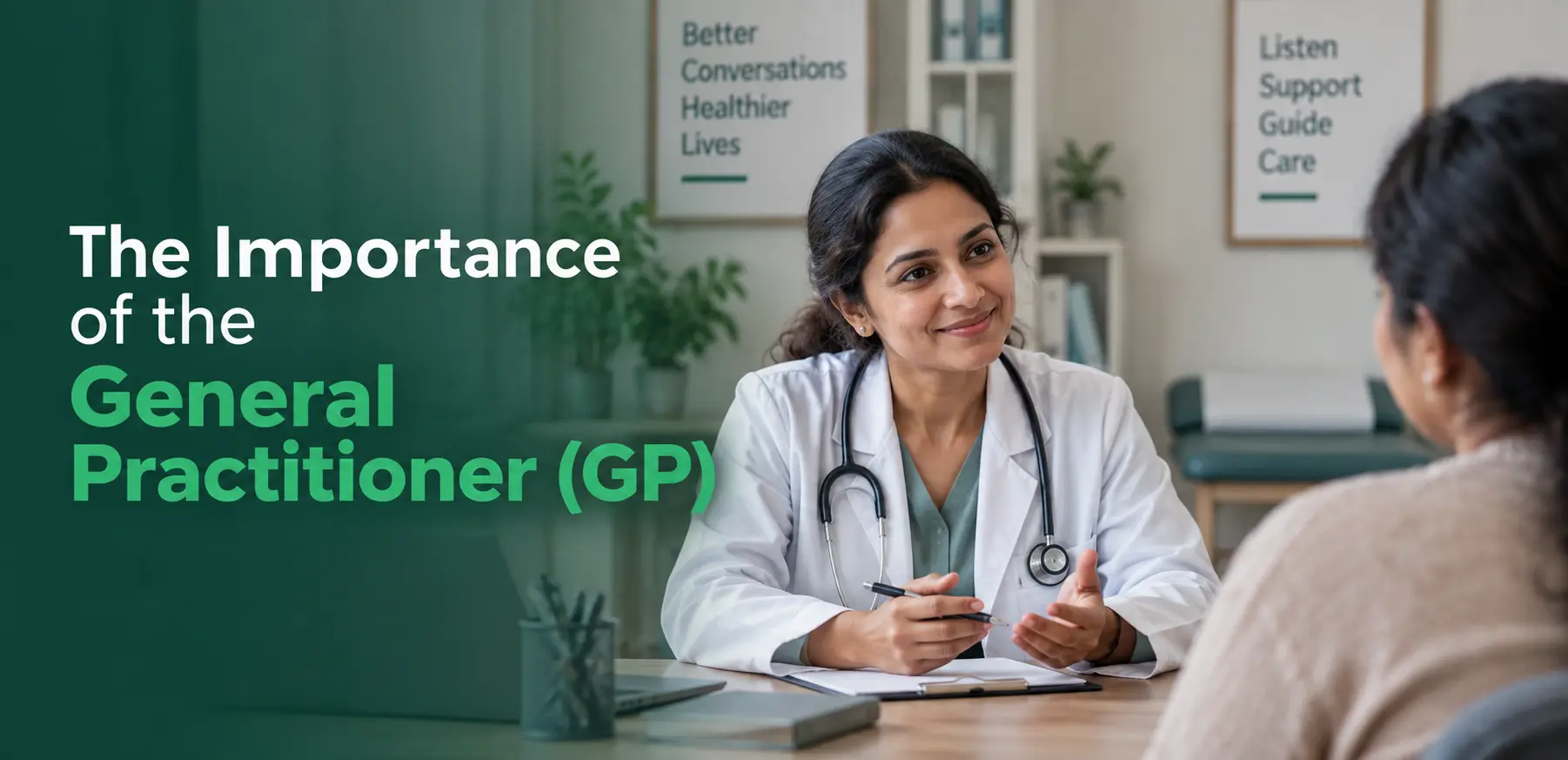
A General Practitioner (GP), or family physician, is a primary care doctor who looks after both physical and mental health. For many families, the GP is the first point of contact when something feels off, whether it's a physical symptom or emotional struggles like anxiety, stress, or low mood.
What makes a GP valuable is the relationship built over years of visits. A doctor who has known a patient and their family for a long time starts to notice more than surface-level complaints. They pick up on subtle changes in mood, sleep, or behaviour, offer initial support or treatment, and know when it's time to bring in a specialist. This blend of physical care and mental health awareness is exactly what Dr. Patel speaks to in the conversation below.
Role of General Practitioners in Mental and Physical Health
The Mental Health First Aid Program in India, among others, promotes and educates the public on mental health professionals and the services they can provide. It helps the public seek services from appropriate, recognised professionals, thereby avoiding the worsening of mental health problems and cutting costs.
In this connection, we have reached out to one of the most senior medical doctors practicing in Chennai for more than five decades now, Dr. Prakash N. Patel, MBBS, DTMH (Liv), FCGP, FCIP.
Why should people or families visit and have a general practitioner?
It is important for an individual or a family to have a general practitioner (GP) because a visit to the GP saves time and money for trivial illnesses, and the GP is more familiar with such day-to-day illnesses. Being familiar with a GP also helps in emergency situations, as he can tackle an acute health problem at one's home and, if needed, refer the patient to the right hospital or consultant for further management of the illness. Accessing a GP shows a positive culture of addressing health problems at an early stage, avoiding serious issues.
What is the importance of the GP in the early identification of health problems in general as well as mental illnesses?
In today's world, mental stress, especially in the education system and at work, is large, and it is here that a family GP is able to pinpoint early the signs and symptoms and hence is able to help by providing initial talking and counselling and, if needed, some medication. Most GPs are able to treat stressful ailments, provide initial help, and refer patients to the right specialist if required. A general practitioner’s role is important for the physical and mental health of society. In the long run, a GP becomes a friend of the family and knows the physical and mental health conditions of every member of the family.
How important is addressing mental health issues, just like physical health problems?
Although I have specialised in tropical medicine and hygiene, I have been in general practice for the last 54 years. In my practice as a G.P., I have become more than a doctor to my patients. I have become a friend, philosopher, and guide to them and members of their families. Knowing my patients’ physical and mental health histories has built trust, and as a result, they come to me not just for any illness but to confide in me about their personal problems. People tend to avoid reporting mental health problems with the same ease as physical health problems. However, a GP can understand the presence of signs and symptoms of common mental health problems. This is where a GP like me, who is a friend of the family, can help in the early identification of emotional and mental health problems. In this way, a GP can help prevent mental stress and other common mental health problems at an early stage. There is a connection between physical health and mental health. One can’t enjoy wellbeing without both physical and mental health being addressed equally.
Key message:
Make it a habit to see a general practitioner regularly, for yourself and your family, rather than only when something feels wrong. Pair this with regular exercise and give your mental health the same attention and seriousness you'd give any physical illness. Wellbeing only comes when both body and mind are cared for together, and building this habit today is one of the simplest steps toward a healthier, more balanced life for everyone at home.