
Why Every NGO Worker and Volunteer Needs Mental Health First Aid Training
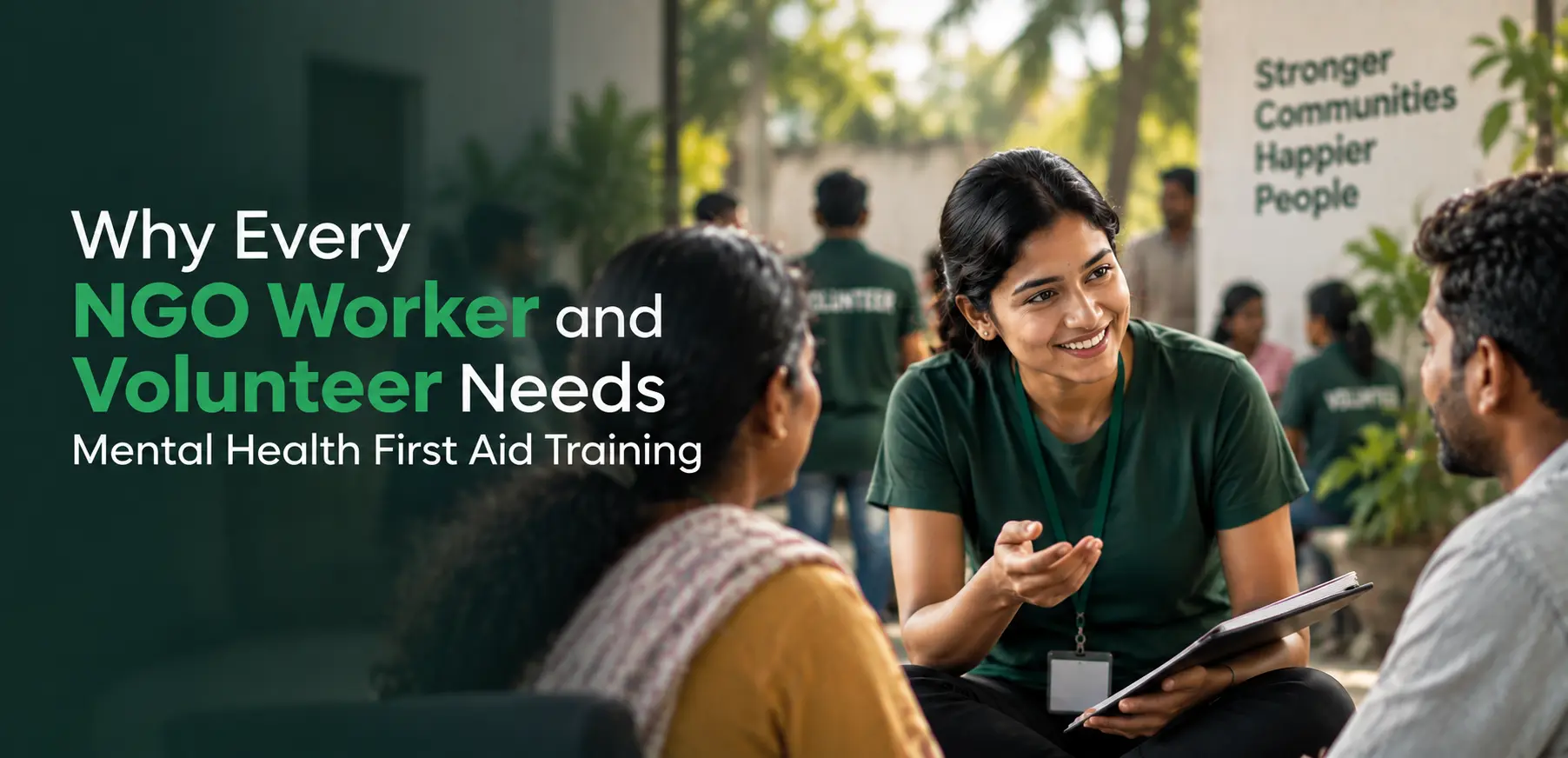
We love to cheer for the NGO workers. Whenever disaster strikes, be it a sudden flood or the quiet, grinding reality of systemic poverty, India’s NGO workers, grassroots activists, and weekend volunteers are the first on the scene. They stay long after the cameras leave. They act as the ultimate shock absorbers for our society.
But what exactly happens when a shock absorber snaps?
Behind the uplifting photos of community rescue or support lies a much darker, rarely discussed epidemic. Severe burnout, compassion fatigue, and secondary trauma are tearing through the social sector. We expect social service workers and volunteers to be made of iron. Yet, they spend their days absorbing the panic, grief, and desperation of the people they serve. We hand them physical first aid kits and wish them luck, completely ignoring the psychological armor they actually need. It’s time to look at the hard clinical data behind this hidden crisis!
Growing Mental Health Crisis Among NGO Workers and Volunteers in India
India’s social sector is driven by immense empathy. However, this empathy comes at a steep cost. NGO workers consistently absorb the trauma of the communities they serve. This phenomenon, known as vicarious trauma or secondary traumatic stress, accumulates quietly over time. Without structured interventions, this cumulative stress severely impacts the physical and emotional health of the people society relies on the most.
Why Mental Health Support for NGO Workers Is No Longer Optional
The psychological toll of humanitarian work is profound. A study evaluating professional and volunteer refugee aid workers found that the prevalence of Post-Traumatic Stress Disorder (PTSD) among these volunteers can range from 6% to 42%. When the data shows such a staggering impact on mental health, we must acknowledge as a society that social service is inherently traumatising. Providing structured mental health support is no longer just a corporate HR initiative; it is a vital public health necessity. We cannot expect social service providers to pull communities out of crisis if they are collapsing under psychological strain themselves.
The Mental Health Treatment Gap Among NGO Workers and Volunteers
Despite the clear psychological risks documented in research, there remains a massive treatment gap. A review of organizational support by Prudnikova highlights a severe systemic oversight: society is excellent at preparing teams for physical emergencies but fails to prepare them for emotional ones. Volunteers are sent into disaster zones and community outreach programmes with physical first aid kits, but no tools to manage a psychological breakdown. This leaves a dangerous gap in how we protect our caregivers.
How Mental Health Stigma Stops NGO Workers From Seeking Help
In India, there is an unspoken expectation of unwavering strength placed on social service providers. Society views them as "saviours," which breeds a toxic stigma. It makes it incredibly difficult for workers to admit when they are struggling because they feel they must always be strong for others.
A meta-analysis of Mental Health First Aid trials by Morgan et al. demonstrated that stigma is directly tied to a lack of mental health literacy. When the public and the workers themselves do not understand the clinical reality of trauma, they view burnout or trauma experiences as a personal failure. This stigma forces many volunteers to suffer in silence, delaying critical interventions that could save their careers and their well-being.
Mental Health Challenges Faced by NGO Workers and Volunteers in India
The challenges on the ground go far beyond long hours and physical exhaustion. NGO workers in India frequently navigate heart-wrenching realities—child poverty, domestic abuse, abandoned individuals, and natural disasters. Because funding is often tight, they are pushed to do more with less. Research confirms that this environment leads to specific, severe challenges, primarily extreme emotional exhaustion, compassion fatigue, and moral distress. When workers are constantly exposed to suffering without a psychological safety net, chronic burnout becomes inevitable.
How Trained NGO Workers and Volunteers Reduce the Mental Healthcare Burden
India faces a well-documented shortage of professional mental health experts. Empowering everyday citizens, volunteers, and field staff with mental health knowledge creates a powerful ripple effect. The PLOS One meta-analysis by Morgan et al. conclusively found that MHFA training significantly improves anyone’s ability to recognise mental health disorders.
When a trained volunteer can identify the early signs of distress—whether in a community member, a rescued child, or a fellow colleague—they can provide immediate, initial help. By acting as a first line of support, trained individuals prevent situations from escalating, thereby reducing the heavy burden on the professional mental healthcare system.
Suicide Prevention and Crisis Intervention Skills for NGO Workers
Crisis intervention requires specific, actionable skills; good intentions alone are not enough to save a life. According to the data evaluating MHFA effectiveness, trained individuals show a marked increase in confidence when providing initial help during an acute crisis, such as a person experiencing suicidal thoughts. By understanding exactly how to approach someone in severe distress, trained workers can effectively de-escalate situations and act as a safe bridge to professional psychiatric help.
Mental Health Awareness and Education as a Core NGO Worker Strategy
Education must be integrated into how we view social service. Research positions MHFA not just as a niche training, but as a highly effective public health intervention. By promoting this education as a core strategy, society can fundamentally shift its attitude. Mental well-being becomes a standard part of community readiness, rather than a taboo topic whispered about behind closed doors.
What Is Mental Health First Aid (MHFA) Certification?
Mental Health First Aid is an internationally recognised, evidence-based training programme open to the public. It is designed to teach everyday people how to spot the signs and symptoms of mental ill-health and provide help on a first aid basis.
What NGO Staff and Volunteers Learn in a Certified MHFA Course
A certified MHFA course provides concrete, actionable tools for anyone who takes it. Participants learn a structured action plan to approach, listen, and support individuals in distress. The training focuses on improving overall mental health literacy, recognising specific disorders like depression and anxiety, and building the practical confidence needed to step in and help safely.
How MHFA Certification Is Different From Basic Awareness Training
Basic awareness training often stops at defining what mental health is, offering general advice about "self-care." MHFA certification goes much further. It equips participants with a practical, actionable framework. Instead of merely raising awareness, MHFA is a proven intervention that alters behaviour, directly addressing the gap in psychological preparation that leaves so many volunteers vulnerable.
Who in Your NGO Should Get MHFA Certified?
Anyone involved in social service. If you are part of an NGO, volunteer your time, or support social causes, MHFA applies to you. Because the risk of secondary trauma is distributed across everyone doing the work, certification should be broad. Anyone who interacts with vulnerable populations, donates their time on weekends, or manages community outreach can benefit profoundly from these life-saving skills.
Why NGO Workers and Volunteers Need Certified MHFA Training
The demanding nature of social service in India requires a proactive approach to mental health, ensuring that those who help others are equipped to protect themselves.
Recognising Early Signs of Mental Health Distress in the Field
Early intervention changes outcomes. Research confirms that MHFA training significantly improves the ability to recognise the early onset of mental health disorders. For a volunteer, this means noticing subtle changes in a community member’s behaviour or a colleague's mood, allowing for supportive intervention long before a severe crisis hits.
Providing Immediate Support Before Professional Help Arrives
NGO workers and volunteers are often the first—and sometimes only—point of contact in underserved or rural areas of India. Armed with MHFA training, these everyday heroes gain the proven confidence needed to provide immediate, stabilising emotional support while professional clinical help is being sourced.
Reducing Mental Health Stigma Through Trained NGO Workers
Trained volunteers become community catalysts for cultural change. The evidence shows that MHFA is an effective intervention for improving public attitudes toward mental health. By modelling empathetic, stigma-free behaviour in rural villages or urban communities, trained individuals dismantle the deep-rooted cultural barriers that prevent people from seeking help.
Building Long-Term Mental Health Resilience Among the People You Serve
When workers are equipped to handle crises, they foster resilient communities. Furthermore, research on frontline workers indicates that MHFA training enhances the worker's own ability to withstand challenges. This allows volunteers to remain a stable, supportive presence for the vulnerable populations relying on them over the long term.
How Certified MHFA Training Strengthens Your NGO Team
Whether you are a casual volunteer or a full-time social worker, psychological preparedness builds stronger, more sustainable community efforts.
Integrating MHFA Skills Into Existing Outreach and Field Work
MHFA does not replace physical medical training; it completes it. By addressing the treatment gaps identified in organisational support studies, workers can weave psychosocial preparedness seamlessly into their existing field operations. This ensures a truly holistic approach to community aid.
Training Volunteers and Lay Workers as Certified Mental Health First Aiders
Volunteers, who often experience the highest rates of PTSD, are in desperate need of this support. Training everyday lay workers translates into a deeply embedded network of first responders who understand the nuances of emotional exhaustion and can act as a peer-support safety net for society.
Creating Safe Spaces for Mental Health Conversations at Work and in the Field
Knowledge dispels fear. The confidence gained through MHFA training allows volunteers and staff to speak openly about the emotional toll of their work. This openness naturally creates safe spaces, reducing the intense isolation that often accompanies heavy humanitarian efforts.
Referring People to the Right Professional Support
A key component of MHFA is understanding boundaries. Trained volunteers are not therapists or psychiatrists. Rather, their improved mental health literacy ensures they know exactly how and when to gently guide individuals toward appropriate, professional clinical care within the Indian healthcare system.
Who Can Benefit From MHFA Training Within Your NGO?
The positive impacts of MHFA training permeate every level of social service, creating a supportive environment for everyone involved.
Field Workers and Community Outreach Staff
These individuals face the highest direct exposure to trauma. For them, MHFA provides the psychological armour necessary to navigate daily interactions without succumbing to the high PTSD risks associated with frontline work.
Programme Managers and Team Leaders
Leaders and coordinators dictate the culture of a mission. When managers are trained, they can better identify signs of emotional exhaustion in their volunteer teams, stepping in to mandate rest before burnout leads to permanent dropout.
Volunteers Working With Vulnerable Populations
Volunteers frequently enter the field with immense passion but zero clinical training. MHFA equips them with the literacy and resilience needed to protect their own mental health while effectively serving others, ensuring their volunteer journey is sustainable, safe, and fulfilling.
Protecting Your Own People: MHFA for NGO Staff Well-Being
The social sector cannot fulfil its mission if the people driving it are constantly burning out. We must protect our caregivers.
Recognising and Responding to Compassion Fatigue and Burnout
Studies show that the lack of psychosocial support leads directly to burnout. By undertaking MHFA training, individuals learn to recognise the signs of compassion fatigue in themselves and their peers—such as cynicism, chronic fatigue, or emotional numbness—enabling them to take a step back and recover proactively.
Building a Mentally Healthy Culture Within Your NGO
A recent study by Eweida et al. on the impact of MHFA among frontline crisis workers demonstrates that implementing this training significantly reduces the likelihood of people quitting their roles due to stress. A mentally healthy volunteering culture is one where people feel supported, capable, and committed to staying for the long haul.
What to Expect From Our Certified MHFA Training Course
Our training at MHFA India is rooted in globally validated methodologies, designed for everyone from the general public to full-time social workers.
- Course Structure and What Is Covered: The curriculum is designed to systematically improve mental health literacy for everyday people. The course covers the recognition of specific disorders, the unlearning of stigmatising attitudes, and the practical application of crisis intervention action plans.
- Certification Process and Validity: Participants who complete the comprehensive training will receive an official, globally recognised MHFA certification. This validates their improved capability to provide initial mental health support safely and effectively, whether at home, at work, or in the field.
- On-Site and Online Training Options for NGO Teams: To accommodate the diverse schedules of the public and active volunteers, training can be delivered flexibly. It is available both in-person or via structured online sessions, without compromising the evidence-based core of the curriculum.
Challenges NGOs Face Without Certified Mental Health Training
Ignoring the psychological realities of social work carries severe consequences that directly impact the communities being served.
Volunteers Unprepared for Mental Health Crises in the Field
Without MHFA, volunteers are left relying solely on their own untreated emotional reserves. As research indicates, this leaves them entirely unprepared to process the trauma they encounter, dramatically increasing their risk of developing secondary trauma.
Missed Early Intervention Opportunities
Without the ability to recognise the early signs of distress, minor psychological issues are allowed to fester into major crises. The lack of mental health literacy means that critical windows for early, preventative support are routinely missed.
Increased Burnout and Staff Turnover
The data is uncompromising: when individuals lack the ability to withstand crisis challenges due to inadequate psychological support, emotional exhaustion peaks. This inevitably leads to high dropout rates, draining the social sector of its most dedicated and compassionate people.
Get Your NGO Team Certified in Mental Health First Aid
Protect the mission by protecting the people who drive it. The research is clear: psychological preparedness is just as vital as physical readiness. Whether you are an individual looking to volunteer safely, or part of a larger social movement, equip yourself with the evidence-based skills proven to improve mental health literacy, build resilience, and save lives.
Sources
- Borho, A., Georgiadou, E., et al. (2019). Professional and Volunteer Refugee Aid Workers–Depressive Symptoms and Their Predictors, Experienced Traumatic Events, PTSD, Burdens, Engagement Motivators and Support Needs. PubMed Central.
- Prudnikova, V. (2024). Organizational support and its impact on mental health in humanitarian aid volunteers. UNF Digital Commons.
- Morgan, A. J., Ross, A., & Reavley, N. J. (2018). Systematic review and meta-analysis of Mental Health First Aid training: Effects on knowledge, stigma, and helping behaviour. PLOS One.
- Eweida, R. S., Khedr, M. A., et al. (2024). Effectiveness of mental health first aid as a supportive tactic on resilience and organisational environment-related factors among hospital nurses in the wake of COVID-19. PubMed Central.
Frequently Asked Questions (FAQ's)
What is Mental Health First Aid Certification for NGO Workers and Volunteers?
Mental Health First Aid (MHFA) Certification is an evidence-based training programme available to the public. It teaches individuals how to identify, understand, and respond to signs of mental illnesses. Based on clinical studies, it fills a critical gap for anyone involved in social work or volunteering in India, equipping them with a practical action plan to handle heavy emotional demands.
Who Should Get MHFA Certified in an NGO?
Because trauma and stress impact everyone involved in social causes, certification is beneficial for all. It is highly recommended for anyone exposed to frontline trauma (volunteers, community outreach staff, disaster relief workers) as well as those who support them, ensuring a widespread network of mental health awareness.
How Long Does the MHFA Certification Course Take?
The standard MHFA certification course typically requires about 12 to 14 hours of learning. This can be delivered through intensive in-person workshops or broken down into blended online learning modules designed to accommodate the busy schedules of everyday citizens and active volunteers.
Can NGO Volunteers With No Clinical Background Get MHFA Certified?
Absolutely. MHFA is specifically designed for laypeople with zero clinical background. Research proves that everyday individuals successfully improve their knowledge, attitudes, and ability to provide safe help after completing the course, regardless of their prior medical training.
How Does MHFA Certification Help NGO Workers Support the People They Serve?
It significantly improves a person's ability to recognise mental health disorders early. When working with vulnerable populations in India, trained individuals can provide immediate, stabilising support and effectively guide people toward appropriate professional resources, preventing situations from escalating.
How Do Certified MHFA Workers Handle a Mental Health Crisis in the Field?
They utilise structured action plans taught in the course. Data shows that this training gives people the confidence to calmly approach the individual, listen non-judgmentally, provide initial support, de-escalate the situation, and act safely to connect the person with professional clinical care.
Does MHFA Certification Help Reduce Burnout in NGO Staff and Volunteers?
Yes, conclusively. Studies focusing on crisis workers indicate that MHFA training enhances an individual's ability to withstand severe emotional challenges. By fostering mental health literacy, volunteers can identify the early signs of compassion fatigue in themselves and their peers, and take steps which directly boosts resilience and reduces burnout.
How Is MHFA Different From Counselling or Therapy?
MHFA is not therapy, and it does not teach people to diagnose conditions. Just as physical first aid is not a substitute for a surgeon, MHFA does not train volunteers to provide psychiatric treatment. Instead, it teaches everyday people how to provide crucial, immediate, temporary support and safely refer individuals to the right professional clinical care.